


If you’re planning an exterior painting project on an older home, you might be dealing with more complexity and pricing options than you bargained for. At Phinney Ridge Painting, we specialize in repainting older homes and we believe that an educated, informed client is an ideal client.
Most of the issues that homeowners run into with their exterior paint job—peeling, bubbling, early failure—aren’t usually caused by the most recent paint job itself but from the decades (or century) of paint buildup underneath it.
Context:
In most regions around North America paint jobs are not all that complicated because the home, siding and trim surfaces are not all that old. A simple repaint just involves some isolated surface prep and then a few new coats of fresh paint. As a result, the residential painting industry is primarily geared toward one type of process and end product which we refer to as a “scrape and paint”. But in a city like Seattle we find entire neighborhoods full of older Craftsman, Tudor, Dutch Colonial and Victorian style homes where old oil-based, lead-containing undercoats are present. In these situations, more work is often needed to ensure a lasting paint bond and a job that will hold up and protect the surfaces underneath from water intrusion and rot.
What sets us apart at Phinney Ridge Painting is the ability to identify the best course of action based on the client’s needs and then tailor a scope of work that is suited to the conditions of the home and the client’s budget. This may involve the straightforward “industry standard” process as described above, or it may require a more involved “full or partial surface restoration” to turn the clock back to zero on some or all of the exterior surfaces to be painted.
What is a scrape and repaint?
A standard scrape and repaint focuses on visible failure:
- Hand scraping of loose paint
- Minimal smoothing of edges and transitions
- Spot priming exposed wood and transitions
- Caulking cracks and gaps
-Application of new paint over stable, pre-existing layers
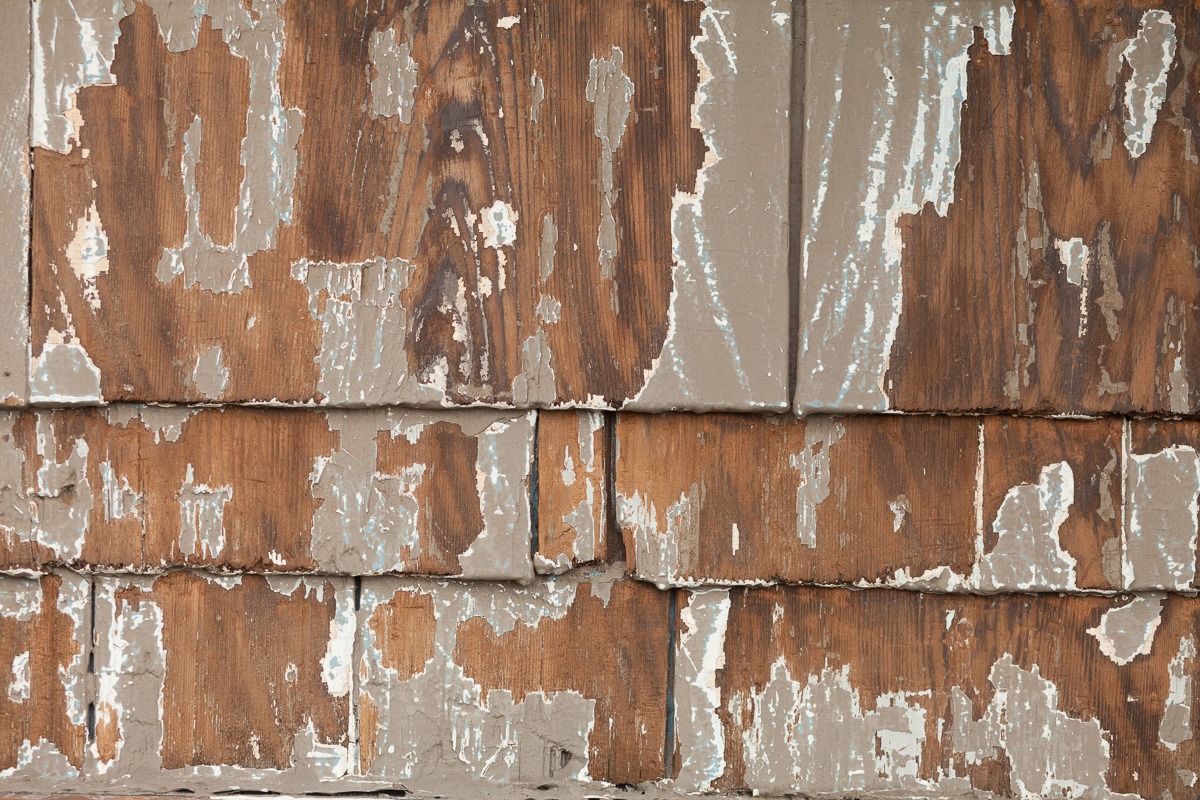
On a newer home or well-maintained paint job, this can be extremely effective.
But on an older home with a failing underlying paint system, this is often inadequate as it only removes a small fraction of the pre-existing paint (5–10%) and can frequently lead to immediate paint failure (bubbling & peeling).
Why is bubbling/peeling paint such a problem on older homes?
Most old homes have never gone through a surface restoration process since original construction and still have multiple layers of old incompatible coatings “hanging” from the siding. These coatings do not breathe well, nor do older homes. This traps ambient moisture under the paint, in the siding and in the wall cavities, causing the original paint bond to the wood substrate to fail in frustrating ways.
Over time:
- Old oil paint becomes brittle and chalky
- Latex paint expands and contracts readily
- The layers stop moving together and start pulling on each other
- Visible bubbling caused by hydrostatic pressure
- Eventual paint/siding failure and/or mold issues
Instead of one stable sealed system, you often find multiple layers that can separate from each other and from the wood itself.
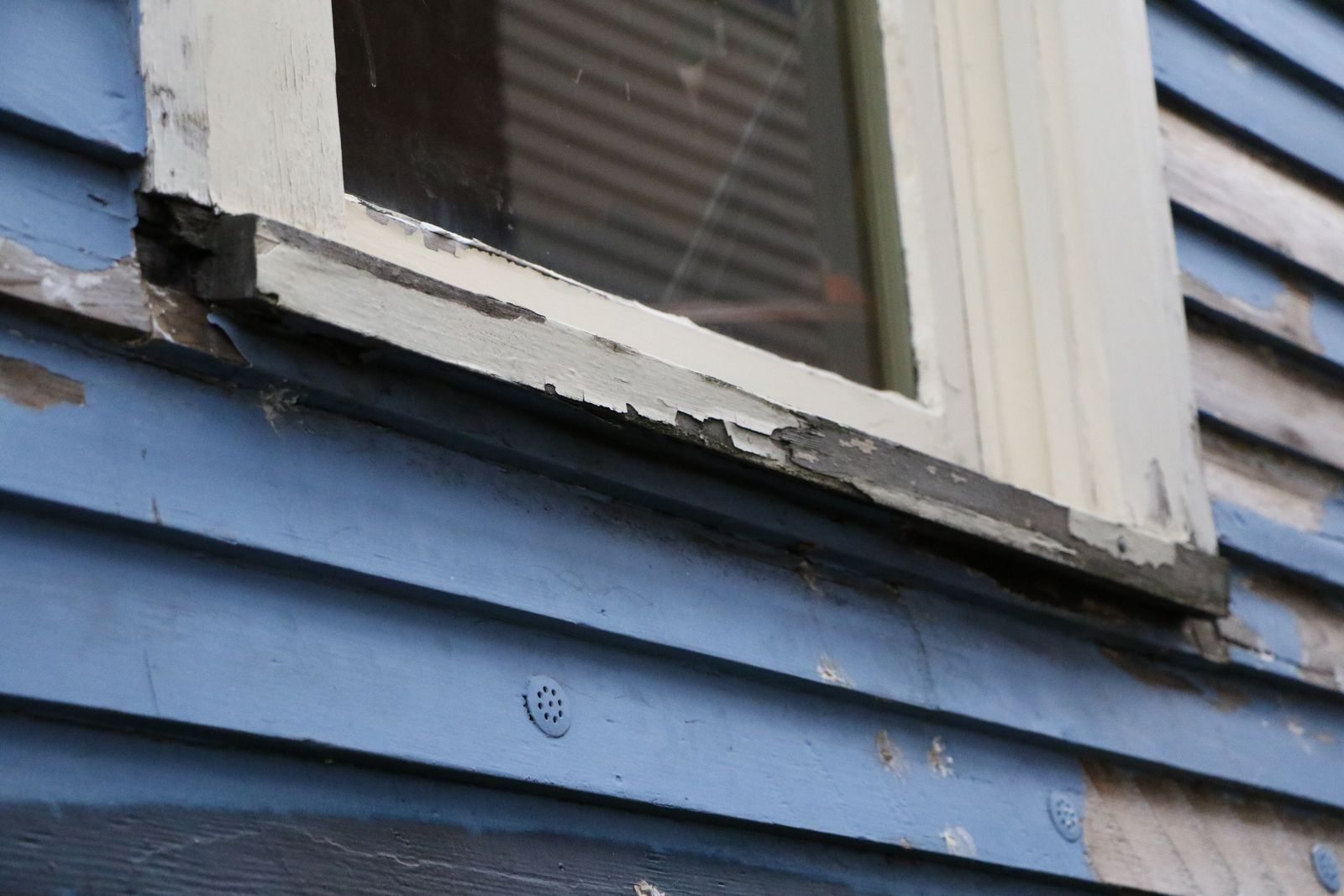
What is siding surface restoration?
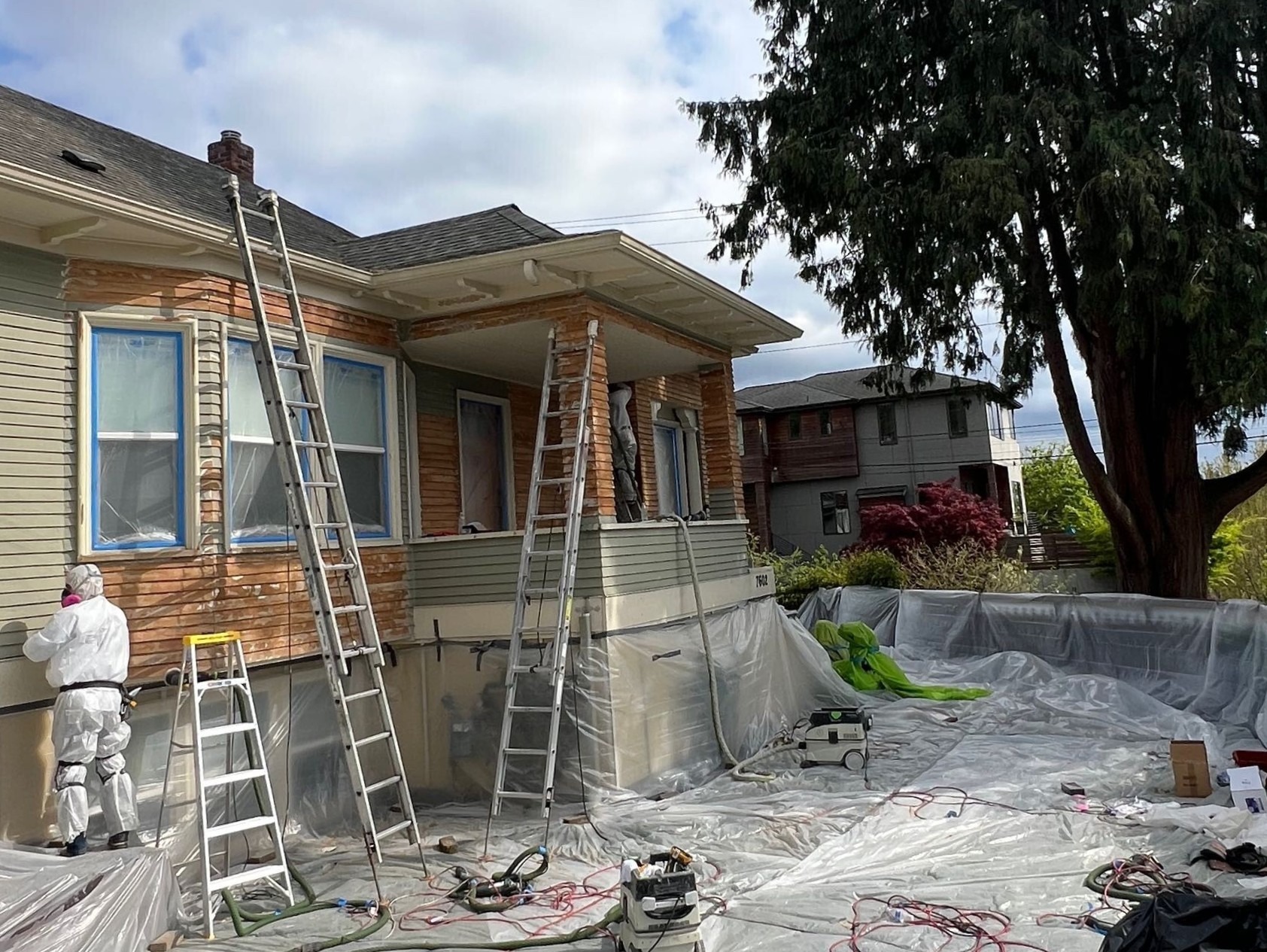
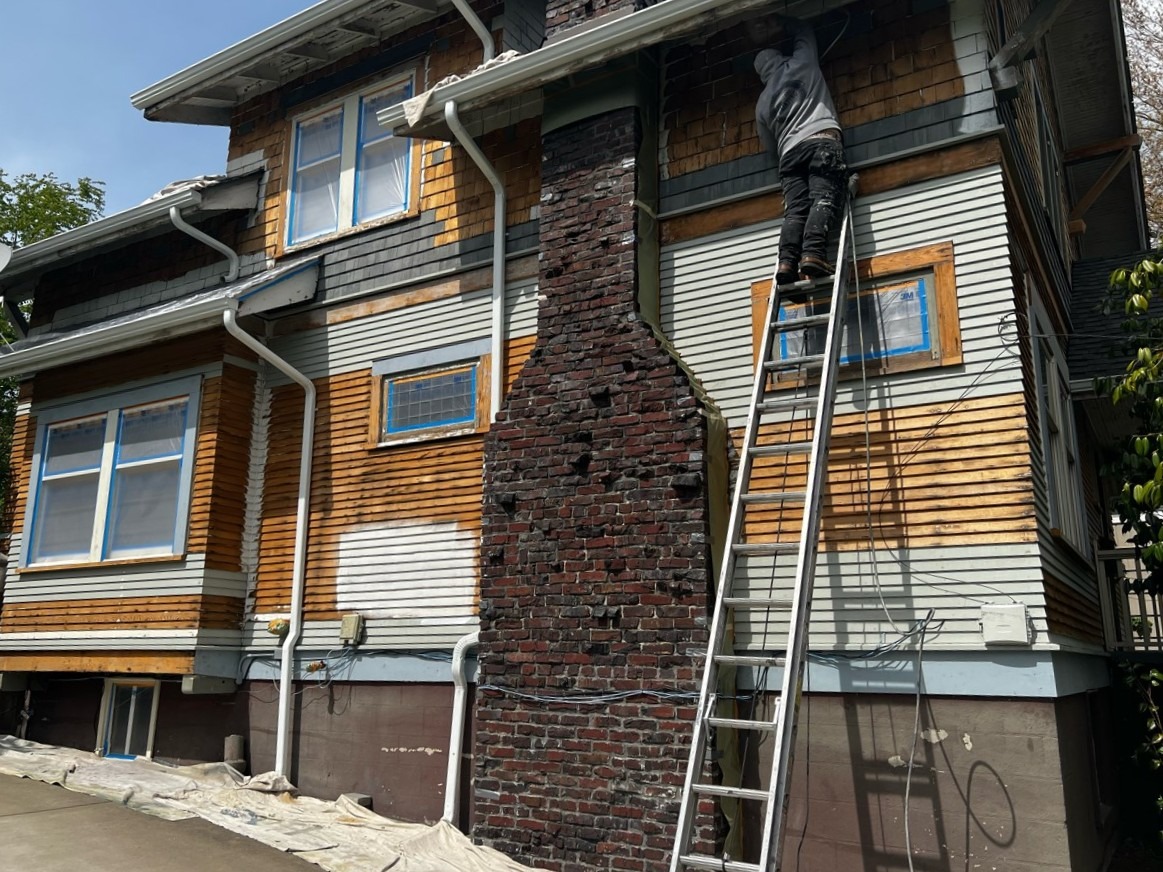
“Surface restoration” refers to the process of taking the paint down to bare wood. Our restoration process leverages the Paint Shaver Pro and Festool Sander systems (with HEPA dust containment)to remove all of the failing paint layers mechanically. This resets the surface properly for a new primer/paint bond.
Note: Phinney Ridge Painting is an EPA-certified firm with over 35 individually certified professionals on staff. All our work is performed in compliance with EPA Renovation, Repair and Painting (RRP) guidelines.
DO I HAVE TO STRIP ALL OF IT?
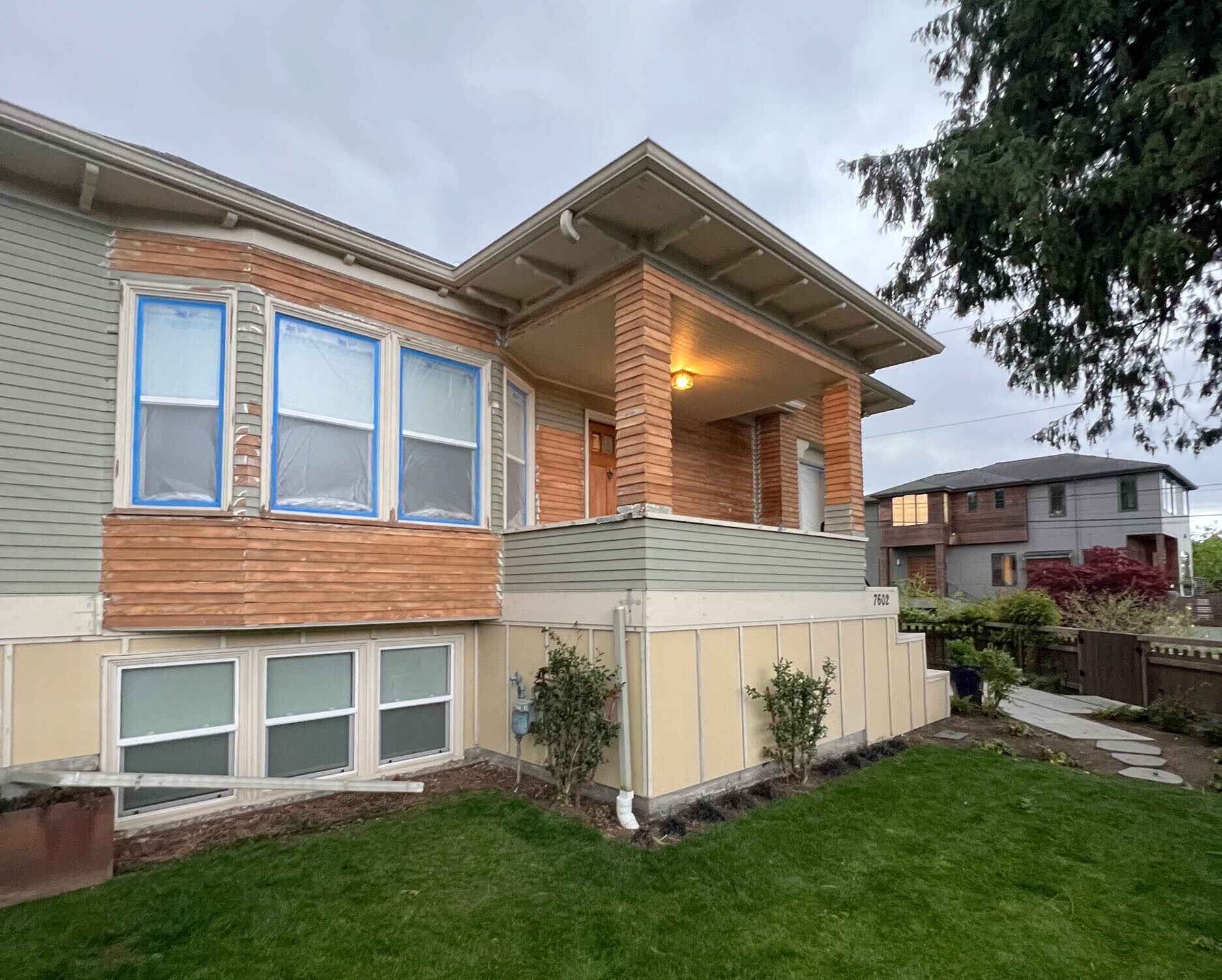
Full vs partial restoration:
- Full: addresses widespread coating failure on all siding surfaces
- Partial: addresses targeted problem areas, only where necessary
We think of partial restoration as a triage process. We will always ask the question; what areas do we need to address now and what can we defer until the next paint job to control costs while maximizing value? Some customers want to take it all down in one go to save long term cost by doing it all at once, others prefer to save cash and defer maintenance until it is needed. We are happy to do either.
How does carpentry fit into exterior painting?
Almost every home we work on needs some amount of carpentry repair. For the purpose of continuity, we like to keep that work “in-house” and have a robust Carpentry Division to tackle these tasks.
Usually we can tell if there are rot or other water related issues beneath an existing paint job at first glance. However, once paint is removed within a full or partial surface restoration process, the real condition of the underlying wood surfaces becomes visible and often additional repairs are identified.
Typical carpentry repairs:
- Replacing isolated siding boards
- Repairing damaged trim
- Addressing localized moisture damage and identifying root causes
***We can also take projects further when it makes sense, including re-siding full exterior exposures to match original profiles and dimensions or transitioning to modern siding products.
Surface restoration vs siding replacement:
When paint systems continue to fail on old homes, homeowners are often misled into believing that the only solution is to fully re-side the home. Unscrupulous General Contractors looking to turn a quick buck will say that the siding itself is the problem—and that replacement - commonly with high carbon footprint fiber cement products like Hardie - is the answer. In many cases, that is not true and is not necessary.
Older homes are often clad in old-growth cedar siding that is still in excellent condition despite many coats of failing paint. This material is irreplaceable from the standpoint of density, stability, durability and most importantly, availability. Our PNW forests and our predecessors paid a huge price for this old growth siding material to exist, and at PRP we believe it should not be thrown into a landfill until its utility has truly expired.
Full siding replacement is one of the most expensive exterior projects a homeowner can take on. In many cases, it is warranted. But in many others it is not. Our surface restoration process frequently lands in the middle of the cost curve between a low cost scrape & paint job and full siding replacement. Our mission is to discuss all available options so that more Seattle residents can avoid throwing the baby out with the bathwater.
Surface Restoration allows for the preservation of this historical material while avoiding unnecessary replacement and maintaining the historical character of the home. This is good for the pocket book…and the planet.
Managing costs over time: Buy nice or buy twice!
Every home and homeowner are different. Goals can vary widely based on home conditions, expected ownership duration and household finances. Our goal is to maximize the value of our work by guiding the customer through the assessment and decision-making process to ensure they are fully informed about various approaches and the outcomes they can expect from each.
Short-term savings often lead to repeated re-painting and significantly higher long-term cost of ownership. Sometimes by including some surface restoration (paint shaving) and adding 20-40% more up-front cost to the prep phase of a paint project, multiple future paint jobs can be avoided and significant savings realized. This is especially true when we think about the ever increasing cost of construction services and the compounding effect these cost increases have when work is being done every 5-6 years rather than 15-20 years.
.jpg)
If you have any questions about how to address the paint on your old Seattle home. Feel free to reach out and contact us any time. We are here to help.
.svg)
Related Posts
Lorem ipsum dolor sit amet, consectetur adipiscing elit.

.jpg)